
Mon - Sat: 10:00 AM - 4:00 PM
whatsapp image
Congenital Heart Defect Repair

Best Peripheral Angioplasty Specialist in Jaipur for Advanced Vascular Care

Get advanced treatment for congenital heart defects with Best ASD & VSD Device Closure in Jaipur. Dr. Anshu Kabra offers minimally invasive device closure procedures for pediatric and adult patients, helping treat ASD and VSD without the need for open-chest surgery.

Recognizing Congenital Defects

Signs & Symptoms of Congenital Heart Defects

Conditions such as ASD (Atrial Septal Defect), VSD (Ventricular Septal Defect), and PDA (Patent Ductus Arteriosus) can affect the normal flow of blood through the heart. Some patients may not experience noticeable symptoms, while others may develop signs that require timely cardiac evaluation. Consulting a best heart specialist in Jaipur can help with proper diagnosis and treatment planning. Look out for these common symptoms in children and adults:

Heart Murmurs

An unusual sound detected through a stethoscope during a heart examination, often caused by abnormal or turbulent blood flow associated with an ASD or VSD. A heart murmur may be an important sign that further cardiac evaluation is needed.

Fatigue & Poor Growth

In infants and children, congenital heart defects may cause tiredness during feeding, reduced appetite, and difficulty gaining weight. In some cases, this can affect normal growth and physical development.

Shortness of Breath & Reduced Stamina

Adults with an ASD or VSD may experience breathlessness during physical activity, reduced exercise tolerance, tiredness, or recurrent respiratory problems. These symptoms may indicate the need for a detailed cardiac evaluation.

The Advanced Device Closure Approach

Treating ASD & VSD Without Open-Heart Surgery

Modern interventional cardiology provides minimally invasive treatment options for selected congenital heart defects. Dr. Anshu Kabra offers the Best ASD & VSD Device Closure in Jaipur, using advanced catheter-based techniques to place a specialized closure device and seal the defect without traditional open-heart surgery.

  • Minimally Invasive Procedure

    The closure device is guided through a catheter inserted through a small access point, reducing the need for a large chest incision or surgical scar.

  • Secure Defect Closure

    Once correctly positioned, the device helps close the abnormal opening. Over time, heart tissue can grow around the device, providing stable and lasting closure.

  • Faster Recovery

    Because the procedure is minimally invasive, eligible patients may experience a shorter recovery period and can gradually return to their usual daily activities as advised by their cardiologist.
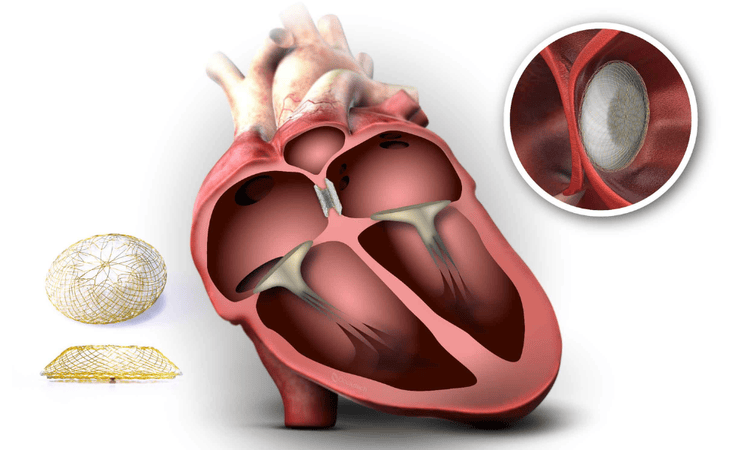
TCongenital Device Closures
The Device Closure Procedure

How ASD & VSD Device Closure Works

The Best ASD Device Closure in Jaipur and Best VSD Device Closure in Jaipur involve minimally invasive, catheter-based techniques for closing suitable heart defects without open-heart surgery. A specialized closure device is carefully guided through a catheter and positioned over the defect to help seal the abnormal opening and support more normal blood flow.

1
Precise Heart Defect Assessment

A detailed echocardiographic evaluation is performed to assess the size, shape, and location of the ASD or VSD. This helps determine whether device closure is suitable and assists in selecting the appropriate closure device.

2
Catheter-Based Access

Under appropriate sedation or anesthesia, a thin, flexible catheter is introduced through a small access point, usually in the groin, and carefully guided toward the heart using advanced imaging.

3
Closure Device Placement

The selected device is carefully positioned across the defect and expanded to cover the opening. Once securely placed, it helps close the abnormal blood flow pathway and provides lasting support for defect closure.
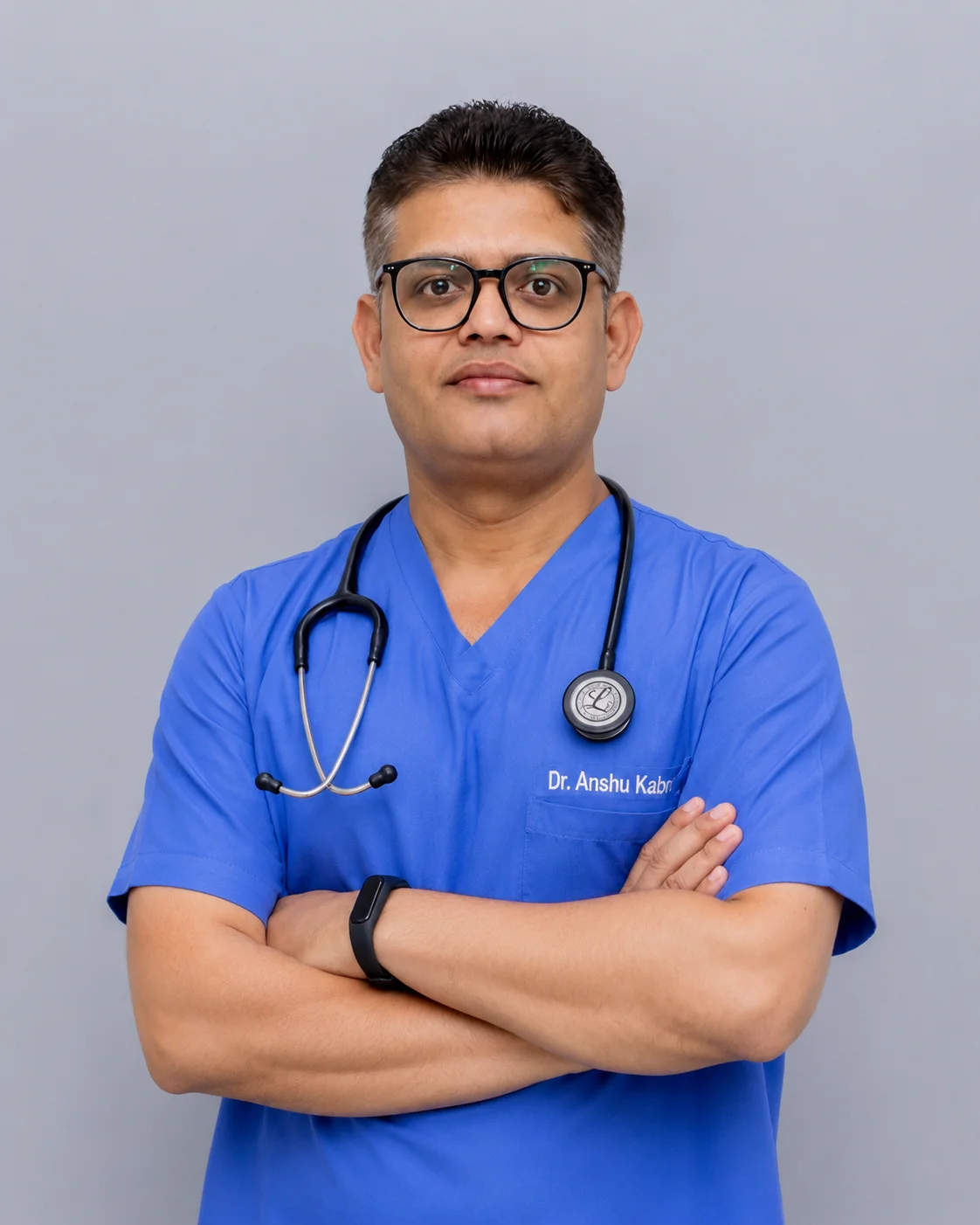
dranshukabracardiologist
Narayana Hospital Additional Director, Cardiology
Why Trust Dr. Anshu Kabra

Expertise & Precision for Advanced ASD and VSD Device Closure

15+ Yrs
Clinical Experience
20,000+
Cardiac Procedures
Add. Director
Narayana Multispecialty Hospital
Dr. Kabra's expertise in this field is rooted in profound academic research. His submitted thesis on the "Prevalence and Pattern of Congenital Heart Disease in Children" showcases his deep diagnostic understanding of these specific conditions.

Finding out our 6-year-old daughter had an ASD was our worst nightmare. The thought of opening her chest was unbearable. Dr. Kabra was so compassionate. He closed the hole using a catheter. She went home two days later with just a tiny bandage on her leg. We are forever grateful.

FAQs

Common Questions About ASD & VSD Device Closure

Learn more about minimally invasive treatment options, procedure suitability, recovery, and what patients can expect from ASD and VSD device closure.

Ask Dr. Kabra Directly

ASD (Atrial Septal Defect) and VSD (Ventricular Septal Defect) are openings between the heart's chambers that can affect normal blood flow. PDA (Patent Ductus Arteriosus) occurs when a blood vessel that normally closes after birth remains open, while RSOV (Ruptured Sinus of Valsalva) is a rare condition involving an abnormal connection between the aorta and a heart chamber. For suitable patients, Best ASD & VSD Device Closure in Jaipur may offer a minimally invasive treatment option after detailed cardiac evaluation.

The closure device is selected according to the size and anatomy of the heart defect and is designed to remain securely in place as the child grows. Over time, heart tissue can grow around the device, helping integrate it into the surrounding tissue. Your cardiologist will recommend the appropriate device size based on detailed imaging and individual assessment.

Recovery recommendations can vary depending on the patient's age, overall health, and the type of defect treated. Generally, patients may be advised to avoid strenuous activities and heavy exertion for a short period after the procedure. Once the cardiologist confirms proper device positioning and recovery, most patients can gradually return to their regular daily activities.

ASD or VSD device closure may be suitable for selected patients depending on the size, location, type of defect, symptoms, and overall heart health. A detailed echocardiogram and cardiac evaluation are important before deciding whether device closure is appropriate.

ASD device closure is a minimally invasive procedure in which a specially designed closure device is guided through a catheter and positioned across the atrial septal defect. For eligible patients, Best ASD Device Closure in Jaipur can provide an alternative to traditional open-heart surgery.

The procedure is generally performed under appropriate sedation or anesthesia, so patients typically do not experience significant discomfort during the procedure. Some soreness or discomfort at the catheter entry site may occur afterward

The duration can vary depending on the type, size, and complexity of the heart defect. Your cardiologist can prov

VSD device closure uses a catheter-based technique to place a specialized device over a suitable ventricular septal defect. The procedure is carefully planned according to the defect's size and location. Patients seeking Best VSD Device Closure in Jaipur should undergo a thorough evaluation to determine treatment suitability.

Request a Device Closure Evaluation

Share your details and our care coordinator will reach out within a few hours to schedule your assessment.

Please enter the patient's name.
Please enter a valid mobile number.
WhatsApp Call Now Book Now