
Get precise care for complex, calcified coronary artery blockages with advanced Orbital Atherectomy treatment. Consult the Best Orbital Atherectomy Specialist in Jaipur for Precision Heart Treatment for expert evaluation and minimally invasive cardiac care tailored to your heart condition.

Rotablation Angioplasty is an advanced catheter-based technique used to treat selected heavily calcified coronary artery blockages. In this procedure, a specialized rotating device is used to modify hard calcium deposits within the artery, helping prepare the blockage for balloon angioplasty and stent placement. A detailed assessment of the coronary arteries is performed before deciding whether this treatment is appropriate. Patients looking for a Best Orbital Atherectomy Specialist in Jaipur can consult an experienced interventional cardiologist to determine the most suitable treatment approach based on their condition.
Orbital Atherectomy systems use a specialized diamond-coated crown and catheter-based mechanism to modify hard calcium within selected coronary artery blockages. The coronary Diamondback 360 system, for example, is designed to facilitate stent delivery in severely calcified coronary lesions. Device selection and use depend on the coronary anatomy, lesion characteristics and clinical assessment.
The Diamondback 360 Coronary Orbital Atherectomy System is a catheter-based system designed for selected severely calcified coronary lesions. It uses a rotating, diamond-coated crown to modify calcified plaque and help facilitate subsequent stent delivery.
The device contains a diamond-coated crown that provides the abrasive surface used to modify hardened calcium within the coronary artery. Its orbital movement allows the crown to treat the calcified lesion while moving along the guidewire.
Orbital atherectomy systems can have different crown configurations depending on the device and intended vascular application. For peripheral systems, Abbott describes Micro, Solid and Classic Crown options designed for different vessel and lesion characteristics. These peripheral configurations should not be presented as coronary treatment options without specific clinical context.
Rotablation is an advanced catheter-based technique used in selected patients with heavily calcified coronary artery blockages. It helps modify hard calcium deposits that can make conventional angioplasty or stent placement difficult. The Best Doctor for Orbital Atherectomy in Jaipur can assess the coronary anatomy and determine whether an advanced calcium-modification procedure is appropriate.
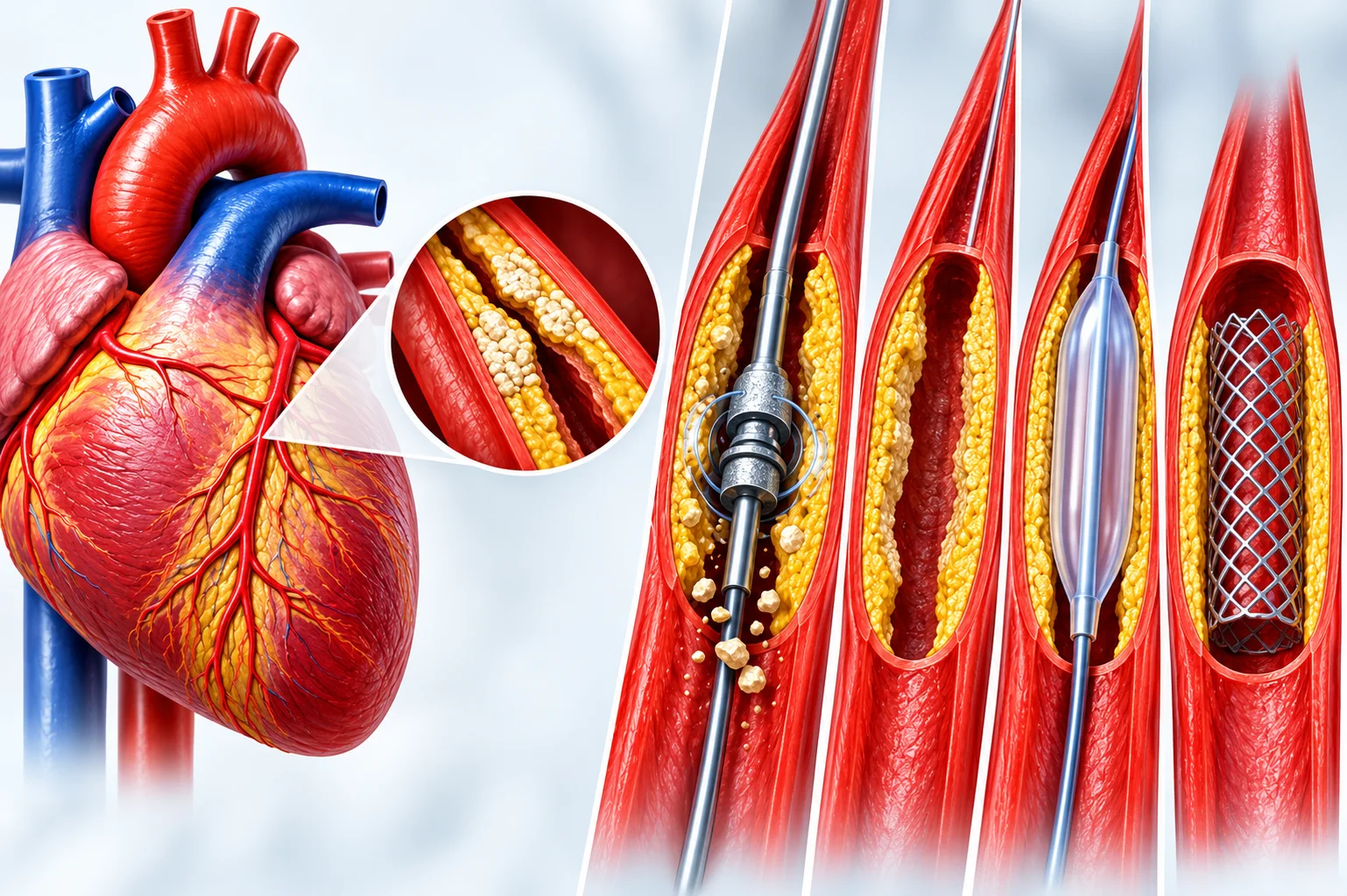
Rotablation can be considered for selected patients with heavily calcified coronary artery blockages where conventional angioplasty or stenting may be challenging. It helps modify hard calcium deposits and prepare the artery for further treatment. The Best Orbital Atherectomy Specialist in Jaipur can assess the severity and location of calcification to determine whether this approach is appropriate.
Rotablation can help modify hardened calcium deposits within a severely calcified coronary artery, making the blockage more suitable for subsequent intervention.
Calcium modification can help create a smoother pathway through a difficult lesion, which may support better stent delivery in appropriately selected patients.
By preparing the calcified lesion before stenting, the procedure can help create conditions for more effective balloon angioplasty and stent expansion.
Advanced calcium-modification techniques may be considered when heavily calcified coronary lesions are difficult to treat using conventional angioplasty and stenting alone.
The treatment is performed using a specialized catheter rather than conventional open surgery, providing a minimally invasive approach for suitable patients.
The need for calcium modification depends on the patient's coronary anatomy, severity of calcification, location of the blockage and overall health. A detailed assessment helps determine the most appropriate treatment strategy.
Dr. Anshu Kabra is an experienced Interventional Cardiologist specializing in advanced catheter-based and minimally invasive cardiovascular procedures. His clinical practice includes the evaluation and treatment of patients with complex and heavily calcified coronary artery blockages, where advanced plaque-modification techniques such as Orbital Atherectomy may be considered.
For patients with severely calcified coronary arteries, a detailed assessment of the blockage, its location, severity, and the overall condition of the artery is important before deciding on the most appropriate treatment approach.
Detailed assessment of the coronary arteries helps identify the location, severity and extent of calcified blockages and determine whether Orbital Atherectomy may be appropriate.
Coronary angiography and, when required, IVUS (Intravascular Ultrasound) can provide detailed information about the artery and the extent of calcium before treatment.
Orbital Atherectomy uses a specialized catheter to modify hard calcium deposits within the coronary artery, helping create a more suitable pathway for further intervention.
By modifying significant calcium, the procedure can help prepare complex coronary lesions for subsequent balloon angioplasty and stent placement in selected patients.
Orbital Atherectomy may be considered for selected patients whose heavily calcified coronary blockages present challenges for conventional angioplasty.
The procedure is performed through catheter access, avoiding the need for conventional open-heart surgery and allowing targeted treatment of the affected coronary artery.
The coronary anatomy and response to calcium modification are assessed during the procedure to help guide the subsequent treatment strategy.
The decision to use Orbital Atherectomy depends on the patient's symptoms, coronary anatomy, degree of calcification, imaging findings and overall clinical condition.
Dr. Anshu Kabra has 15+ years of clinical experience and has performed 20,000+ cardiac procedures. He serves as Additional Director of Cardiology at Narayana Multispeciality Hospital, Jaipur and provides advanced interventional cardiac care for complex coronary conditions.
For suitable patients with heavily calcified coronary arteries, Orbital Atherectomy offers an advanced plaque-modification approach that can help prepare the artery for balloon angioplasty and stent placement. The treatment is considered after detailed evaluation of the coronary anatomy, calcification and the patient's individual clinical condition.
Get clear, simple answers about Orbital Atherectomy, its benefits, procedure, recovery, and when it may be recommended for heavily calcified coronary arteries.
Ask Dr. Kabra DirectlyWhen advanced treatment is being considered for heavily calcified coronary artery blockages, careful evaluation and appropriate procedural planning are important. Dr. Anshu Kabra, Additional Director of Cardiology at Narayana Multispeciality Hospital, Jaipur, has 15+ years of clinical experience and has performed more than 20,000 cardiac procedures. His experience in interventional cardiology supports the assessment and management of patients requiring advanced catheter-based cardiac procedures.
Dr. Anshu Kabra provides interventional cardiac care for patients with complex coronary artery disease, including cases where significant arterial calcification can make conventional treatment challenging.
Orbital Atherectomy uses a specialized catheter-based system to modify hardened calcium within selected coronary blockages, helping prepare the artery for further intervention.
A detailed assessment of the coronary arteries helps determine the location and extent of calcification. Coronary angiography and, when required, IVUS may be used to support treatment planning.
The treatment approach is selected according to factors such as the severity of calcification, location of the blockage, coronary anatomy and the patient's overall clinical condition.
In suitable patients, calcium modification can help prepare a heavily calcified lesion for balloon angioplasty and coronary stent placement, supporting the subsequent intervention.
Orbital Atherectomy is performed through catheter access, providing a minimally invasive approach for selected patients with challenging calcified coronary lesions.
Patients searching for the Best Cardiologist in Rajasthan can consult Dr. Anshu Kabra for evaluation of complex coronary artery disease and discussion of appropriate advanced interventional treatment options, including Orbital Atherectomy.
Get personalized guidance for your heart condition. Share your details with our care team, and we’ll help you take the next step toward an expert evaluation.