
Experience advanced, minimally invasive TAVI/TAVR treatment for severe aortic stenosis with a focus on precision, safety, and faster recovery. As a TAVI Expert in Jaipur, Dr. Anshu Kabra provides personalized valve care designed to help eligible patients avoid the trauma of traditional open-heart surgery.
Aortic stenosis develops when the aortic valve becomes narrowed or stiff, making it harder for the heart to pump blood efficiently throughout the body. If left untreated, severe aortic stenosis can significantly affect heart function and overall well-being. Recognizing the warning signs early can help you seek timely cardiac evaluation and appropriate treatment.
Experiencing unusual shortness of breath or difficulty breathing, particularly during physical activity, climbing stairs, or while resting or lying down.
Experiencing chest pressure, tightness, or discomfort, particularly during physical activity, as the heart works harder to pump blood through the narrowed aortic valve.
Experiencing sudden weakness, lightheadedness, or fainting spells caused by reduced blood flow from the heart, which may limit the amount of blood reaching the brain.
TAVI (Transcatheter Aortic Valve Implantation), also known as TAVR, offers a minimally invasive approach to replacing a diseased aortic valve. As a trusted TAVI Specialist in Jaipur, Dr. Anshu Kabra provides advanced valve care through catheter-based techniques, helping eligible patients receive effective treatment with less surgical trauma.
The procedure avoids the large chest incision and breastbone opening required in traditional open-heart valve surgery.
As an experienced TAVI Expert in Jaipur, Dr. Kabra evaluates each patient based on their age, health, anatomy, and overall surgical risk to determine whether TAVI is an appropriate treatment option.
With minimally invasive valve treatment, eligible patients may benefit from a shorter hospital stay and a quicker recovery. Patients seeking the best heart doctor in Jaipur can receive personalized evaluation and comprehensive care throughout their treatment journey.
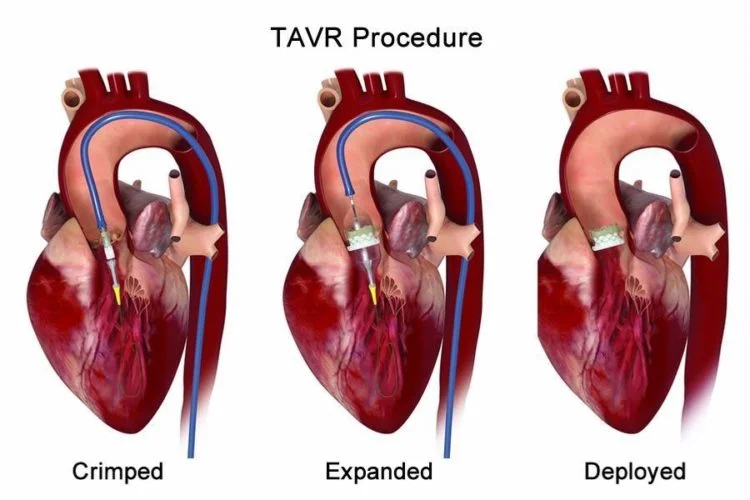
A minimally invasive, catheter-based valve replacement procedure designed to treat severe aortic stenosis without traditional open-heart surgery.
Under appropriate anesthesia, a small puncture is made, typically in the femoral artery. A thin, flexible catheter is carefully guided through the blood vessel toward the heart.
The compressed replacement valve is delivered through the catheter to the diseased aortic valve. Once correctly positioned, it is expanded and secured, allowing it to take over the valve's function and regulate blood flow.
After the new valve is securely placed, the catheter is removed and the access site is closed. As a TAVI Expert in Jaipur, Dr. Kabra focuses on precise treatment and personalized care. Patients seeking the best heart specialist in Jaipur can receive comprehensive evaluation and advanced valve care.
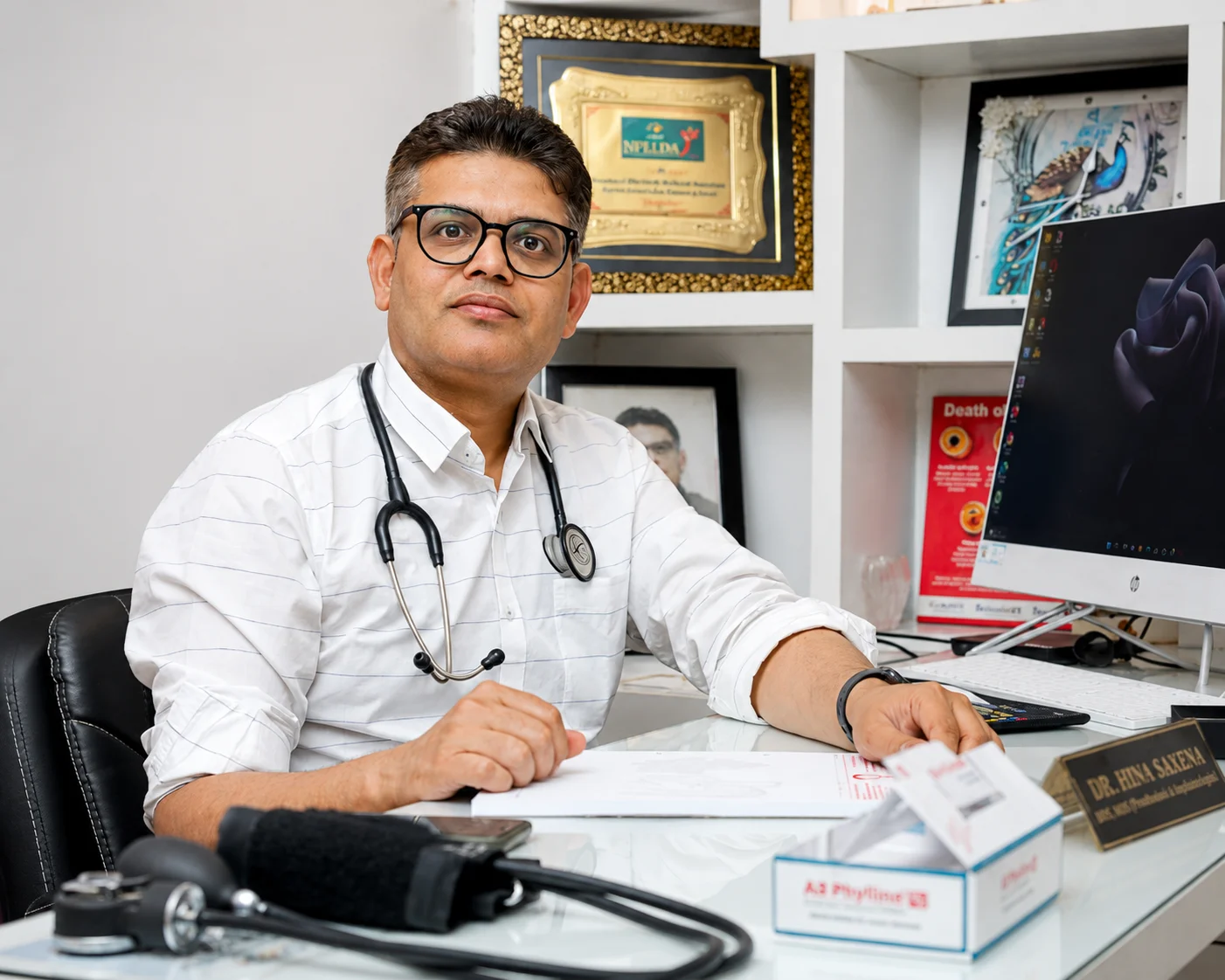
This specialized fellowship provided advanced exposure to modern, minimally invasive techniques used in the management of complex structural heart conditions. The training focused on contemporary catheter-based procedures designed to treat structural cardiac diseases while minimizing the need for conventional open-heart surgery.
During his fellowship in Kazakhstan, Dr. Kabra received hands-on training and clinical exposure in advanced structural heart interventions, including:
Transcatheter Aortic Valve Implantation / Replacement for patients with severe aortic valve disease. His specialized training in TAVI supports his role as a TAVI Expert in Jaipur for patients being evaluated for minimally invasive aortic valve treatment.
Advanced catheter-based approaches for selected patients with complex mitral valve conditions.
Minimally invasive closure techniques for congenital structural defects such as Atrial Septal Defect and Patent Foramen Ovale.
Advanced cardiac imaging techniques for detailed assessment, procedural planning and guidance during complex structural heart interventions.
The fellowship was completed at University Medical Centre in Astana, Kazakhstan, where Dr. Kabra gained exposure to advanced structural heart technologies and contemporary interventional techniques.
The international training allowed him to observe and learn approaches for managing complex structural heart conditions, including abnormalities involving the heart valves, cardiac septum and other structural components of the heart.
The fellowship further strengthened his ability to understand and apply modern catheter-based treatment strategies, with an emphasis on precision, patient safety and minimally invasive cardiac care.
During the fellowship, Dr. Kabra had the opportunity to learn under the guidance of experienced specialists, including:
Their clinical guidance and experience contributed to Dr. Kabra's understanding of advanced structural heart interventions and contemporary procedural techniques.
This international fellowship added another dimension to Dr. Kabra's expertise in structural and interventional cardiology. The knowledge and procedural exposure gained in Kazakhstan can be applied to the evaluation and management of appropriate patients requiring advanced catheter-based cardiac interventions in Jaipur.
Today, his structural heart practice includes minimally invasive approaches such as TAVI/TAVR and congenital defect device closures, alongside advanced cardiac imaging and interventional procedures. His broader clinical profile includes an MD in General Medicine and DM in Cardiology, with DM training at Jayadeva Institute of Cardiovascular Sciences & Research, Bangalore.
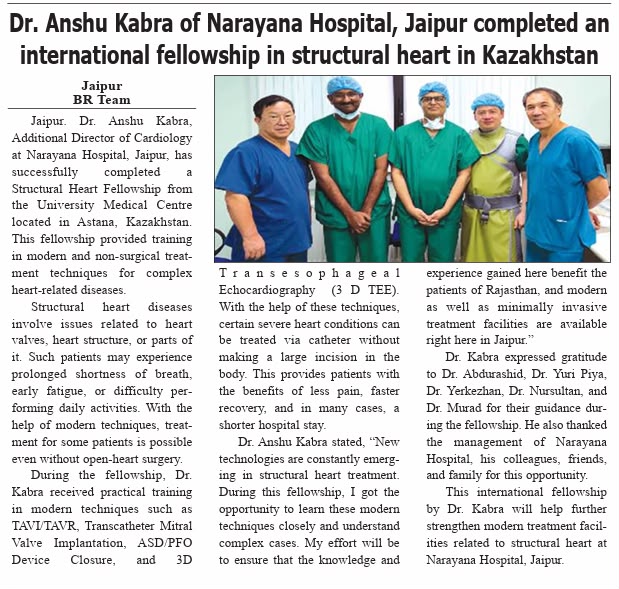
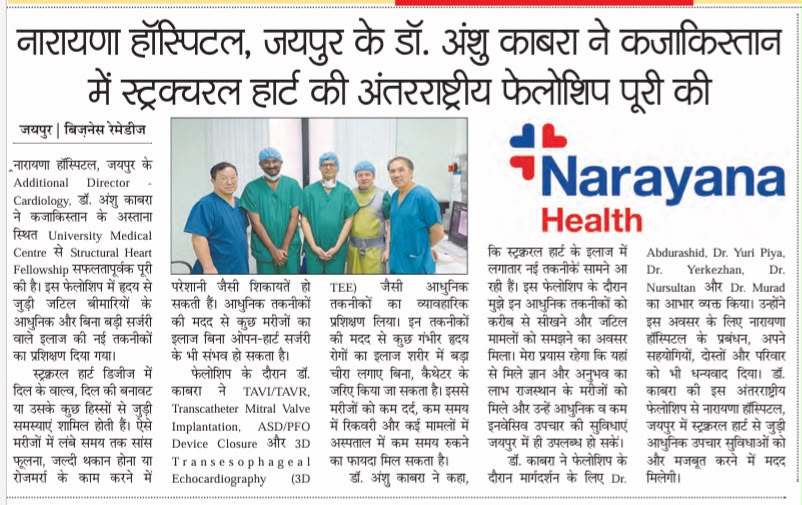
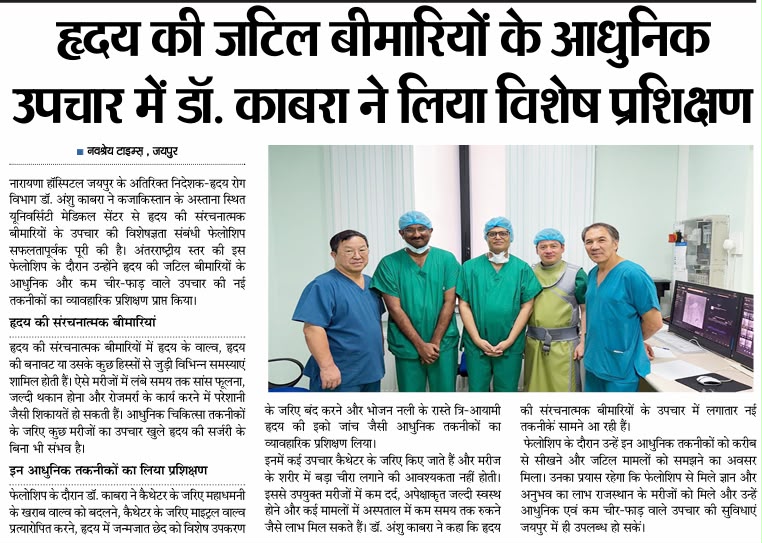
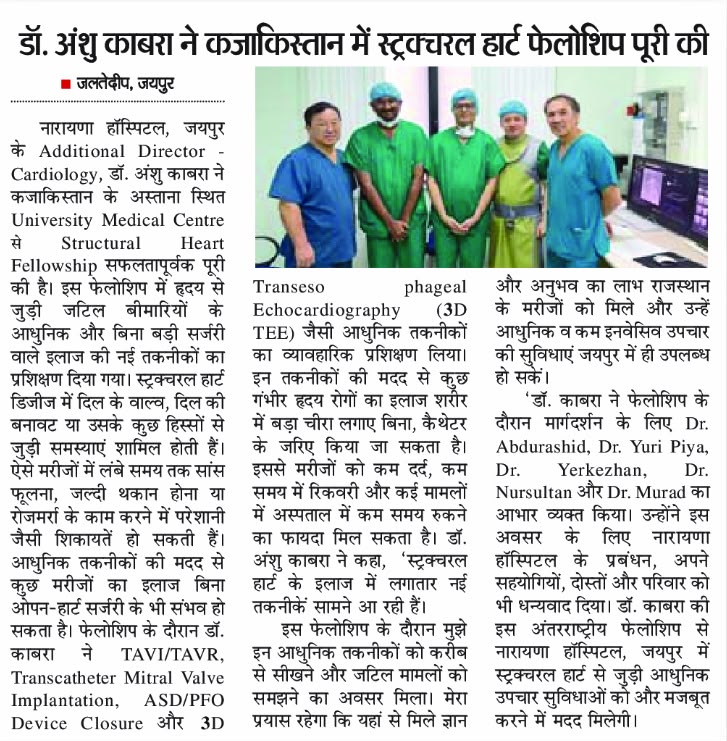
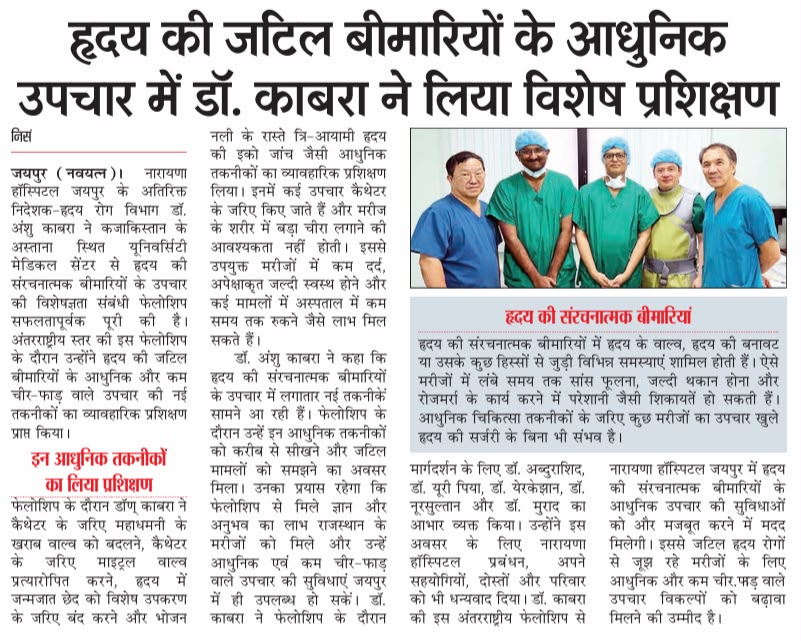
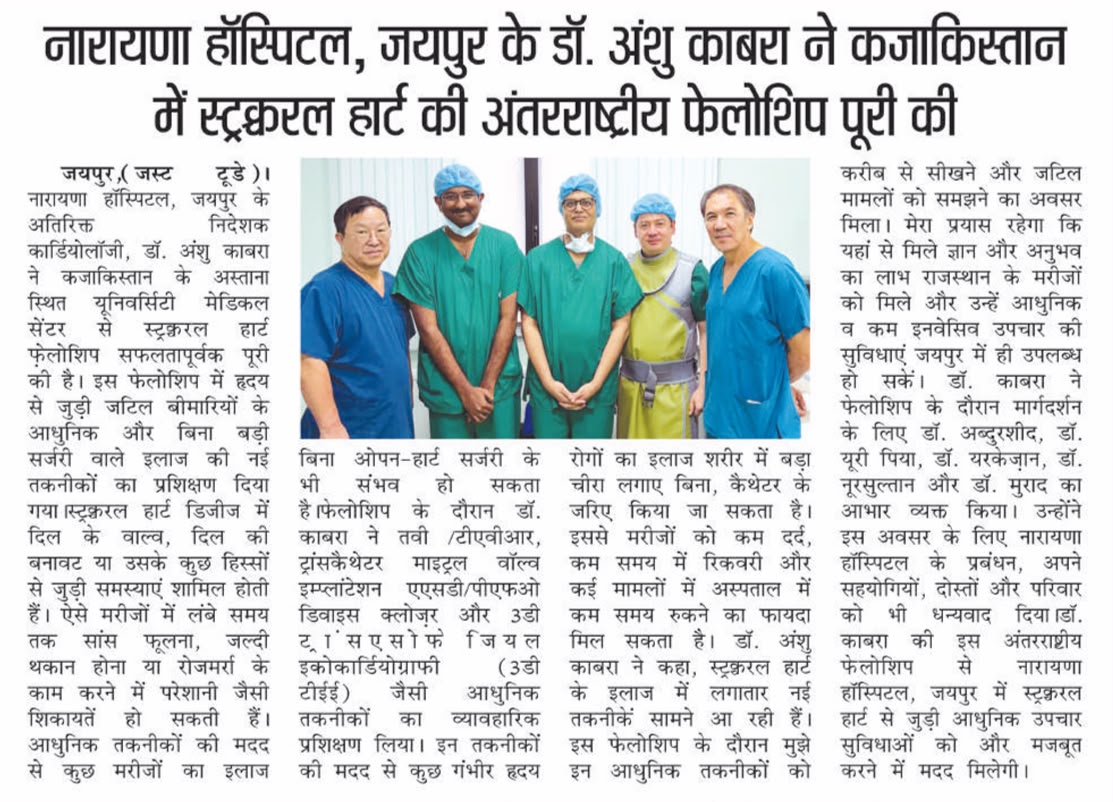
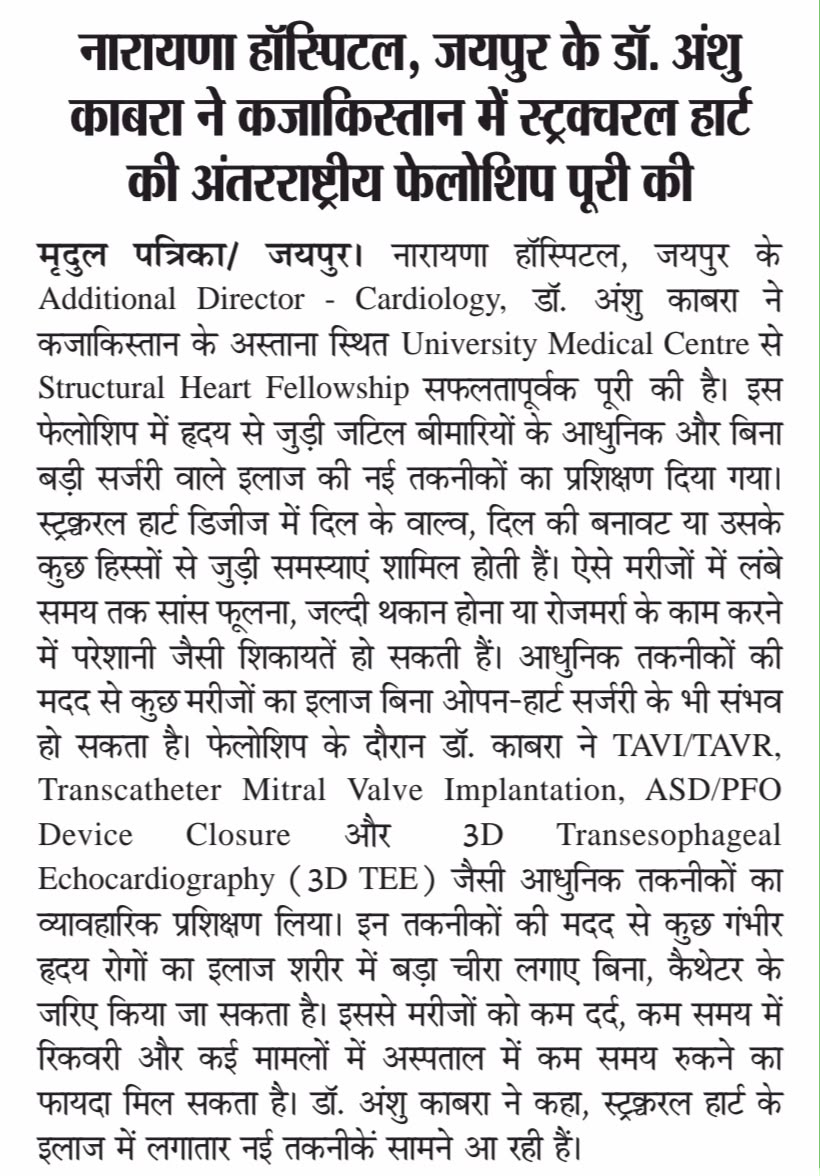
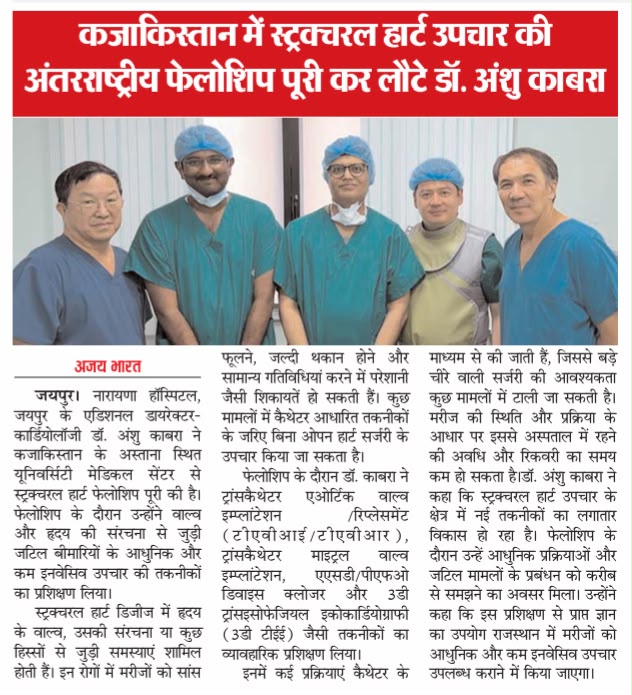
News coverage highlighting Dr. Anshu Kabra’s international Structural Heart Fellowship at University Medical Centre, Astana, with advanced training in TAVI/TAVR and minimally invasive heart procedures.
Get clear, simple answers about TAVI/TAVR, eligibility, the procedure, recovery, and what to expect during your heart valve treatment journey.
Ask Dr. Kabra DirectlyConnect with our cardiac care team for a personalized evaluation and guidance on the most suitable treatment for your heart valve condition.
The cost of TAVI surgery in Jaipur can vary depending on several factors, including the patient's medical condition, type of heart valve used, diagnostic tests, hospital facilities, cardiologist's expertise, and duration of hospital stay. Since every patient's treatment plan is different, the final cost is generally determined after a detailed cardiac evaluation.
TAVI (Transcatheter Aortic Valve Implantation), also known as TAVR, is a minimally invasive procedure used to replace a diseased aortic valve. Before the procedure, the cardiac team may perform tests such as an echocardiogram, CT scan, ECG, blood tests, and other assessments to determine the patient's suitability for TAVI.
TAVI (Transcatheter Aortic Valve Implantation) and TAVR (Transcatheter Aortic Valve Replacement) are two terms commonly used for the same minimally invasive procedure used to replace a diseased aortic valve. The main difference is the terminology rather than the treatment itself.
| TAVI | TAVR |
|---|---|
| Stands for Transcatheter Aortic Valve Implantation | Stands for Transcatheter Aortic Valve Replacement |
| Focuses on the implantation of the new valve | Focuses on replacing the diseased valve |
| Commonly used in the UK, Europe, and some other regions | Commonly used in the USA and other regions |
| Uses a catheter-based approach | Uses a catheter-based approach |
| Does not usually require open-heart surgery | Does not usually require open-heart surgery |
Choosing the right hospital for TAVI surgery in Jaipur is important, especially when treating conditions such as severe aortic stenosis. A hospital with an experienced cardiac team, advanced diagnostic facilities, structural heart expertise, and comprehensive cardiac care can help patients receive appropriate treatment based on their individual needs.
Narayana Health NH Jaipur provides advanced cardiac care and offers TAVI (Transcatheter Aortic Valve Implantation) as part of its cardiac treatment services. The hospital's cardiac sciences department provides minimally invasive valve procedures along with comprehensive diagnosis and management of various heart conditions.