
When angioplasty isn't enough, choose the Best Rota-ablation Treatment in Jaipur. Dr. Anshu Kabra offers advanced Rotational Atherectomy for safe and effective treatment of complex calcified heart blockages.
Rotablation, also known as Rotational Atherectomy, is an advanced catheter-based procedure used for selected patients with severely calcified coronary artery blockages. It uses a specialized, diamond-coated rotating burr to modify hardened calcium deposits within the artery. This can help prepare the treated lesion for balloon angioplasty and stent placement when conventional techniques may be challenging.
Patients looking for the Best Rota-ablation Treatment in Jaipur can undergo a detailed evaluation by an experienced interventional cardiologist to determine whether Rotablation is appropriate for their coronary condition.
Rota-ablation is mainly used when severe calcium buildup makes coronary artery blockages difficult to treat with standard angioplasty. The Best Heart Specialist for Rotablation in Jaipur evaluates the blockage and recommends this technique when calcium modification can help improve stent delivery and blood flow.
Extensive calcium can make the artery stiff and difficult to expand during angioplasty. Rota-ablation helps modify these hard calcium deposits, preparing the treated segment for further intervention.
Some blockages remain difficult to cross or treat because of dense calcification. In selected cases, Rota-ablation can help create a better pathway for balloons and stents during coronary intervention.
Patients undergoing technically challenging angioplasty may require calcium modification to support proper stent delivery and expansion. Rota-ablation can be used as part of the procedure when conventional techniques are not sufficient.
Rota-ablation can be an important treatment option for selected patients with severely calcified coronary artery blockages. By modifying hard calcium and preparing the artery for angioplasty and stent placement, it may allow some complex blockages to be treated without CABG. However, the decision depends on the blockage pattern, heart condition and overall patient suitability.
Rota-ablation uses a high-speed diamond-coated burr to modify hard calcium deposits, making the treated artery more suitable for balloon angioplasty and stent placement.
In carefully selected cases, calcium modification can make a difficult coronary blockage more amenable to PCI, potentially providing an alternative to bypass surgery when angioplasty is considered appropriate.
Not every patient with complex coronary disease is suitable for Rota-ablation. A detailed assessment by an experienced cardiologist helps determine whether Rotablation-assisted angioplasty or bypass surgery is the more appropriate treatment.
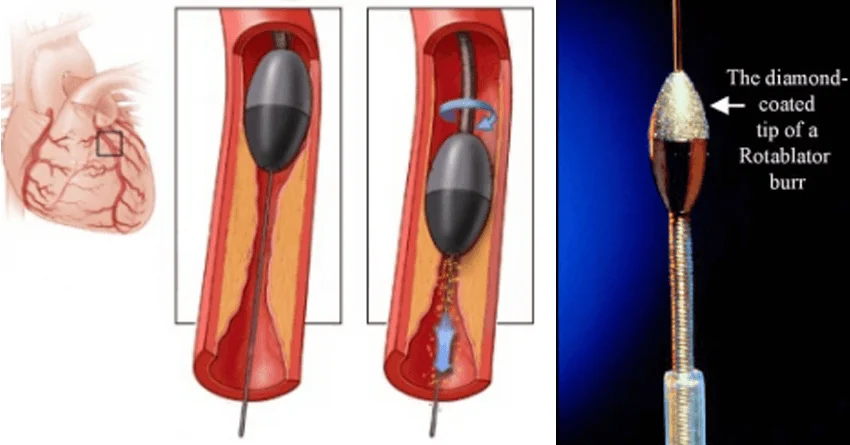
Rota-ablation is a specialized catheter-based technique used in selected patients with severely calcified coronary artery blockages. It helps modify hard calcium within the artery so that subsequent angioplasty and stent placement can be performed more effectively. The Best Rota Ablation Specialist in Jaipur can evaluate the blockage and determine whether this treatment is appropriate.
Rota-ablation uses a specialized rotating device to modify hardened calcium deposits within the coronary artery, helping prepare the lesion for further treatment.
In heavily calcified arteries, calcium can make conventional balloon angioplasty challenging. Rota-ablation can help modify the lesion and facilitate the next stage of treatment.
After appropriate calcium modification, the prepared artery may allow easier passage and placement of a coronary stent in patients undergoing PCI.
Adequate preparation of a heavily calcified lesion can support better balloon expansion and help achieve more effective stent deployment.
Rota-ablation may be considered when significant coronary calcification makes a blockage difficult to treat with conventional angioplasty techniques alone.
The procedure is performed through a catheter inserted into the blood vessel, making it a minimally invasive treatment option for appropriately selected patients.
The suitability of Rota-ablation depends on the extent and location of calcium, the characteristics of the blockage and the patient's overall cardiac condition. Careful evaluation helps determine the most appropriate treatment approach.

My father was told his blockages were too hard for stents and that he urgently needed an open-heart bypass. We were terrified because of his age. We took a second opinion from Dr. Kabra. He used the Rota-ablation drill and placed the stents perfectly. He quite literally saved my father from open-heart surgery.
Find expert answers from the Best Heart Specialist for Rotablation in Jaipur to help you understand the procedure, benefits, recovery, and who may need advanced Rotablation treatment.
Ask Dr. Kabra DirectlyWhen heavily calcified coronary artery blockages make conventional angioplasty challenging, choosing an experienced interventional cardiologist is important for proper evaluation and treatment planning. Dr. Anshu Kabra, Additional Director of Cardiology at Narayana Multispeciality Hospital, Jaipur, has 15+ years of clinical experience and has performed more than 20,000 cardiac procedures. His experience in interventional cardiology supports the evaluation and management of patients requiring advanced catheter-based treatments such as Rota-ablation.
Dr. Anshu Kabra provides interventional cardiac care for patients with complex coronary artery disease, including heavily calcified blockages that may require specialized treatment techniques.
Rota-ablation uses a specialized rotating catheter to modify hard calcium deposits within selected coronary blockages, helping prepare the artery for subsequent angioplasty and stent placement.
Before Rota-ablation, the coronary arteries are carefully evaluated to understand the severity, location and characteristics of the calcified blockage. This helps determine whether calcium modification is appropriate.
The treatment strategy is individualized based on factors such as the extent of calcification, blockage location, vessel characteristics and the patient's overall cardiac condition.
In suitable cases, Rota-ablation can help modify a heavily calcified lesion, making it more suitable for balloon angioplasty and subsequent coronary stent placement.
Rota-ablation is performed through catheter access rather than open-heart surgery. This allows selected patients with challenging calcified lesions to undergo a specialized minimally invasive coronary intervention.
Patients looking for the Best Heart Doctor in Jaipur can consult Dr. Anshu Kabra for evaluation of complex coronary artery disease and to understand whether Rota-ablation or another interventional treatment may be appropriate for their condition.
Fill in your details, and our heart care coordinator will reach out to arrange your consultation with an experienced specialist.