
Don’t let a blood clot put your health at risk. Dr. Anshu Kabra is a Best Penumbra DVT Treatment Specialist Jaipur, offering advanced DVT management with Penumbra Aspiration technology for effective, minimally invasive clot removal.

Deep Vein Thrombosis (DVT) is a condition in which a blood clot forms in a deep vein, most commonly in the legs. The clot can restrict normal blood flow and, in some cases, may travel to the lungs and cause a serious complication known as pulmonary embolism. Early diagnosis and appropriate treatment are important for managing DVT and reducing the risk of complications. Patients requiring advanced clot-removal treatment can consult the Best DVT Penumbra Treatment Specialist in Jaipur for individualized evaluation.
DVT occurs when a blood clot develops inside a deep vein, commonly in the thigh, calf or other parts of the leg. The clot can partially or completely obstruct normal venous blood flow.
DVT may cause swelling, pain or tenderness in the affected leg. Some patients may also experience warmth, skin discoloration or discomfort that becomes more noticeable while standing or walking.
If part of a DVT clot breaks away and travels through the bloodstream to the lungs, it can cause a pulmonary embolism (PE). This can be a serious medical emergency and requires prompt medical evaluation.
The symptoms of Deep Vein Thrombosis (DVT) can vary depending on the size and location of the blood clot. DVT most commonly affects the legs and may cause swelling, pain, warmth, and changes in skin color. Recognizing these symptoms early can help in timely evaluation and treatment. Dr. Anshu Kabra, a DVT Treatment Specialist in Jaipur, provides expert evaluation and treatment for patients with DVT, helping them receive appropriate care based on their condition.
Swelling in one leg, particularly around the calf, ankle or foot, is a common symptom of DVT. The affected leg may appear noticeably larger than the other leg.
DVT may cause pain, tenderness or cramping in the affected leg, often involving the calf. Discomfort may become more noticeable while standing or walking.
The skin over the affected area may feel warmer than usual and can appear red, purple or darker than the surrounding skin.
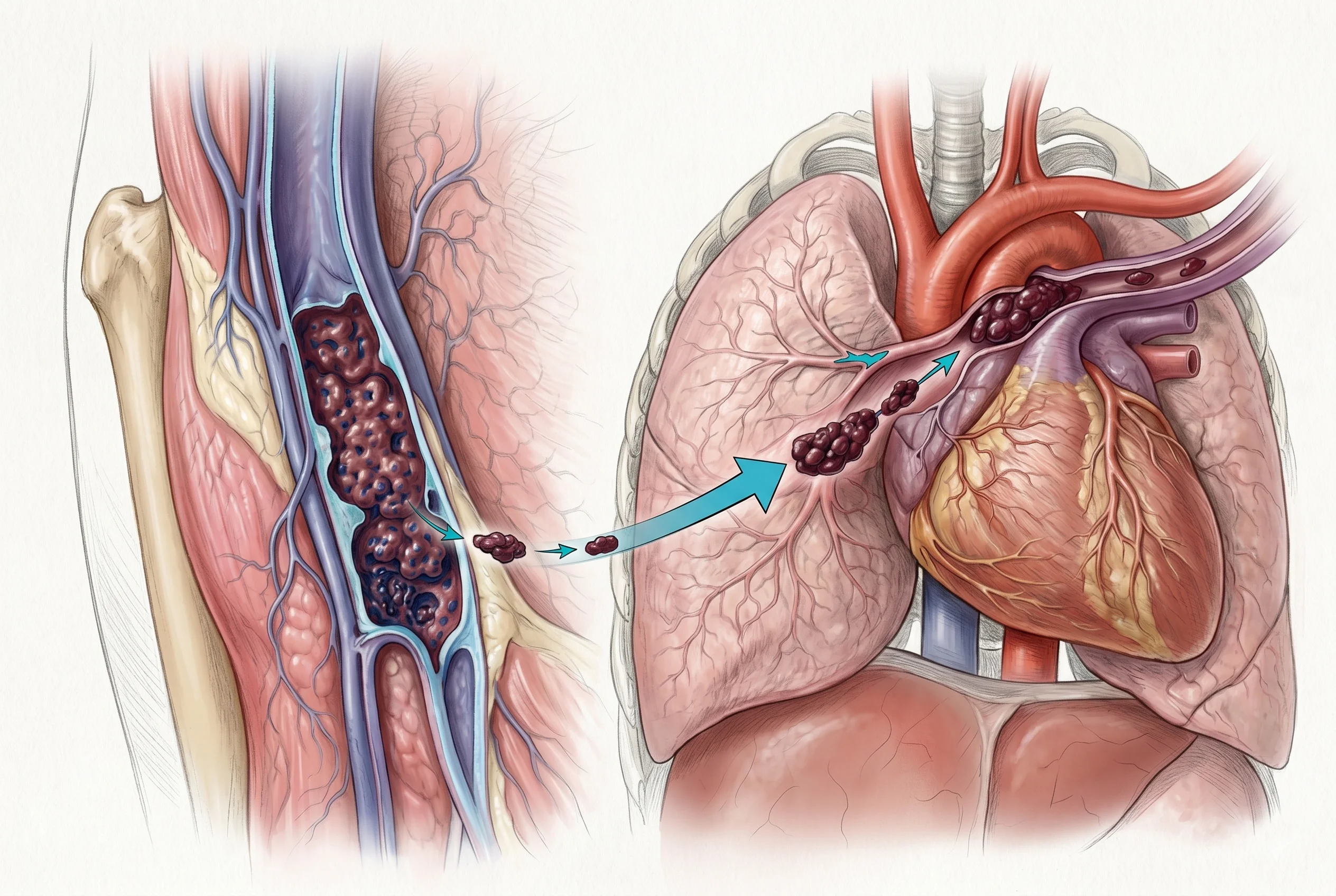
Treatment for Deep Vein Thrombosis (DVT) depends on factors such as the location and extent of the clot, severity of symptoms, duration of the condition and the patient's overall health. DVT Treatment in Jaipur may include medicines and, in selected patients, minimally invasive catheter-based procedures to remove the clot and restore venous blood flow.
Blood-thinning medicines are commonly used to prevent the existing clot from growing and reduce the risk of new clots. The type and duration of anticoagulation are determined according to the patient's individual condition.
Depending on the patient's condition, compression therapy and appropriate physical activity may be recommended to support venous circulation and help manage swelling and discomfort.
For selected patients with extensive or symptomatic DVT, minimally invasive catheter-based treatment may be considered. A catheter is guided into the affected vein to access and treat the blood clot.
Penumbra aspiration thrombectomy uses a specialized catheter and aspiration system to help remove blood clots directly from the affected vein. It may be considered when clot removal is clinically appropriate.
After clot removal, the vein may be evaluated for significant underlying narrowing. In appropriate cases, a venous stent may be considered to support the vein and improve blood flow.
Regular follow-up is important after DVT treatment to assess recovery, venous blood flow and the risk of further complications. Treatment is individualized according to the patient's response and clinical condition.
Dr. Anshu Kabra is an experienced Interventional Cardiologist specializing in catheter-based and minimally invasive cardiovascular procedures. His clinical practice includes the evaluation and management of selected patients with Deep Vein Thrombosis (DVT) and advanced catheter-based treatment approaches such as Penumbra thrombectomy.
For patients with significant or symptomatic DVT, a detailed assessment of the clot's location, extent, symptoms and overall health is important before deciding on the most appropriate treatment approach.
For patients looking for the Best Doctor for DVT Penumbra Treatment in Jaipur, specialized evaluation and appropriate treatment planning are important. Penumbra aspiration thrombectomy is a minimally invasive catheter-based technique that may be considered for selected patients to help remove blood clots from the affected vein.
A comprehensive clinical evaluation and imaging assessment help determine the location, extent and severity of the blood clot and whether catheter-based treatment may be appropriate.
A specialized Penumbra catheter is guided into the affected vein to aspirate and remove the clot, helping restore blood flow in suitable patients.
The procedure is performed through catheter access rather than requiring conventional open surgery, making it a minimally invasive approach for appropriately selected DVT patients.
Venography helps visualize the affected veins and provides important information about the location and extent of the clot before and during the procedure.
After clot removal, the affected vein is evaluated for any significant underlying narrowing or obstruction. In selected cases, additional treatment such as venous stenting may be considered.
Treatment decisions depend on factors such as clot location, severity, symptoms, duration of DVT, underlying venous anatomy and the patient's overall health.
Post-procedure follow-up helps evaluate venous blood flow, recovery and the patient's response to treatment.
Dr. Anshu Kabra has specialized training and experience in interventional and structural cardiology, with a focus on minimally invasive, catheter-based treatment approaches. His practice includes evaluation of patients who may require advanced endovascular and cardiovascular interventions.
For suitable DVT patients, Penumbra aspiration thrombectomy provides a catheter-based approach to clot removal. The treatment is selected after detailed evaluation of the patient's condition, clot characteristics and venous anatomy.
Everything you need to know about modern, minimally invasive treatment options for Deep Vein Thrombosis (DVT).
Ask Dr. Kabra DirectlyChoosing an experienced Interventional Cardiologist is important when evaluating treatment options for Deep Vein Thrombosis (DVT), particularly when minimally invasive catheter-based treatment may be considered. Dr. Anshu Kabra, Additional Director of Cardiology at Narayana Multispeciality Hospital, Jaipur, has over 15 years of clinical experience and has performed more than 20,000 cardiac procedures. His experience in interventional and catheter-based care supports detailed evaluation and individualized treatment planning for suitable DVT patients.
With 15+ years of clinical experience, Dr. Anshu Kabra has managed a wide range of cardiovascular conditions and performed numerous minimally invasive procedures. This experience supports careful assessment of patients with DVT and other vascular conditions.
Selected DVT patients may require minimally invasive catheter-based treatment for clot removal. Dr. Kabra's interventional cardiology experience supports the evaluation and management of patients who may be considered for advanced endovascular procedures.
For suitable patients with significant or symptomatic DVT, Penumbra aspiration thrombectomy may be considered to help remove the blood clot through a minimally invasive catheter-based approach. Patient suitability is determined after detailed clinical and imaging assessment.
Before deciding on treatment, the location, size and extent of the clot are assessed using appropriate imaging. Venography and fluoroscopic imaging can help provide detailed information for treatment planning.
DVT treatment is not the same for every patient. Treatment decisions may depend on the clot's location and severity, symptoms, duration of DVT, venous anatomy and overall health. Dr. Kabra focuses on developing a treatment approach according to the individual patient's condition.
After DVT treatment, follow-up is important to evaluate venous blood flow, recovery and the condition of the affected vein. If significant venous narrowing remains after clot removal, additional treatment such as venous stenting may be considered when clinically appropriate.
Patients searching for the Best cardiologist in Jaipur for evaluation of DVT can consult Dr. Anshu Kabra for a detailed assessment and discussion of appropriate treatment options, including Penumbra-based clot removal for selected patients.
Share your details and our care coordinator will reach out within a few hours to schedule your assessment.